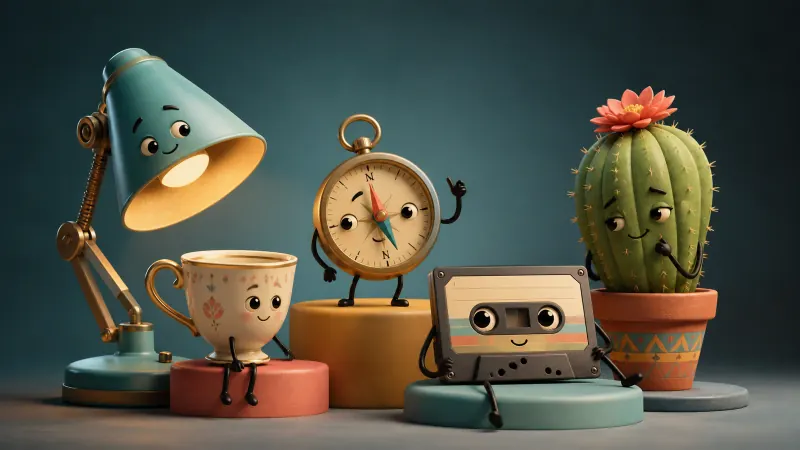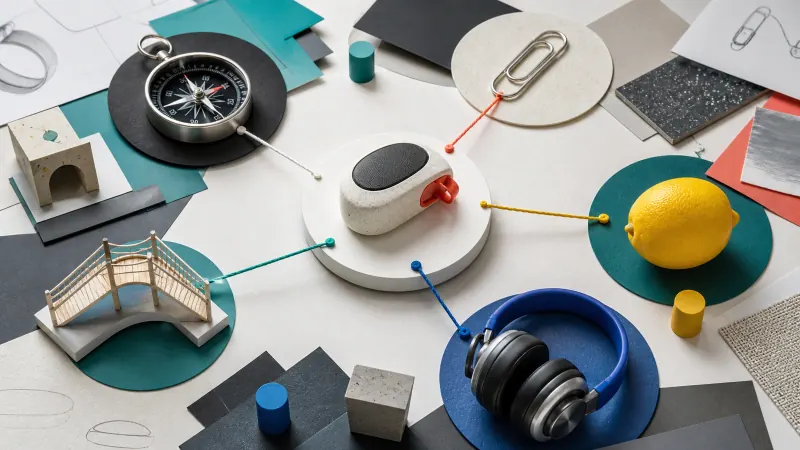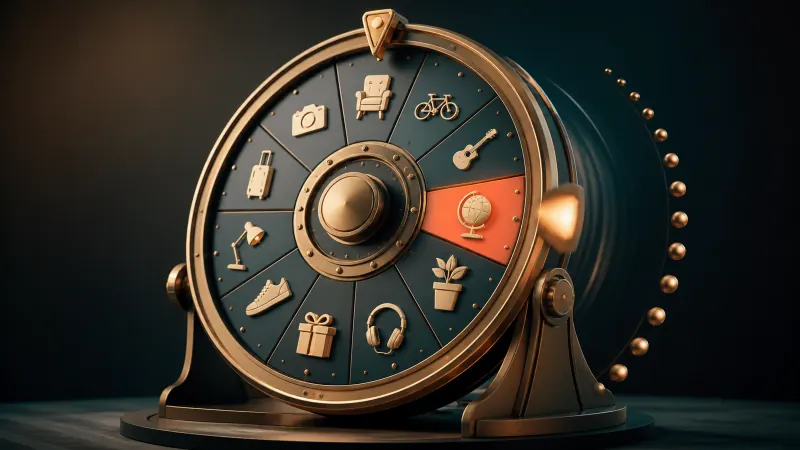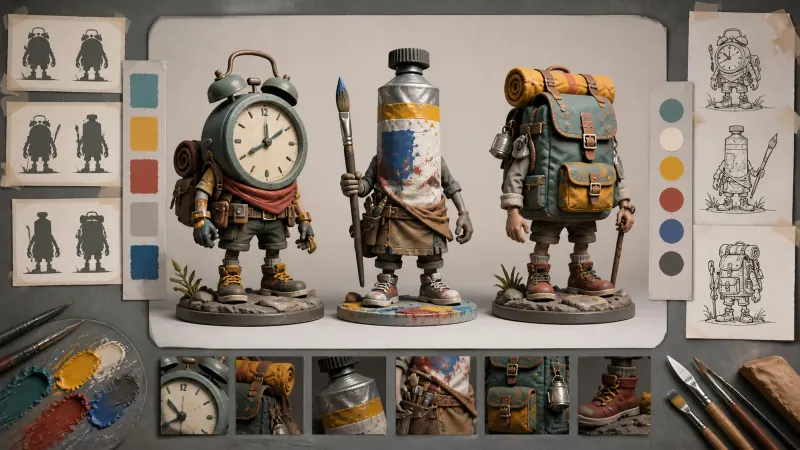
Original characters get stale when they all start from the same place — the same archetypes, the same aesthetics, the same safe choices. An Object Generator injects the one thing that keeps OCs interesting: a constraint you did not choose. When the tool hands you a lighthouse or a magnet, you have to build outward from something specific instead of inward from a trope.
This guide covers several methods for turning random objects into characters, how to use them for design rather than just backstory, and how to avoid the traps that make OCs feel generic.
Why Randomness Produces Better Characters
Given free choice, most people design characters from the same small pool of references. That is not a failure of imagination; it is how taste works. You are drawn to what you already like, which means your characters cluster around a narrow band.
A random object forces a starting point outside that band. You cannot design a character around a colander using your usual instincts, because you have no stored template for it. Everything — silhouette, palette, personality — has to be reasoned out fresh.
The result is not that the object appears literally in the design. It is that the design has a logic nobody else arrived at, because nobody else started from there.
Originality is rarely a better idea. It is usually a stranger starting point followed by ordinary craft.
Four Methods
1. The Symbol Method
Generate one object and treat it as the character's core symbol — something they carry, are associated with, or are named for. A character whose symbol is a compass is defined by direction: a guide, a wanderer, or someone who has lost their bearings.
This is the gentlest method and works well when you already have a rough concept and want to sharpen it.
2. The Translation Method
Generate one object and translate its physical properties directly into design. A lantern: warm palette, glass and metal textures, a light source in the design, a silhouette that is narrow at the top and wide at the base. The object never appears — only its qualities do.
This produces the most visually coherent characters, because every design choice traces back to one source.
3. The Contradiction Method
Generate two objects and build a character who embodies both, especially if they conflict. An anvil and a feather: someone immovable in principle but weightless in presence. A mirror and a brick: reflective and blunt at once.
Contradiction is where characters become interesting, because internal tension is what makes them behave unpredictably.
4. The Inventory Method
Generate five objects and treat them as everything the character owns. Then work backwards: what kind of person has exactly these five things and nothing else? This is unusually good at producing characters who feel lived-in rather than designed.
From Object to Design Choices
| Object property | Design translation |
|---|---|
| Material | Texture, palette, how light behaves on the character |
| Function | Role, profession, what they do for others |
| Failure mode | Character flaw and vulnerability |
| Shape | Silhouette, proportion, posture |
| Age or wear | Backstory, scars, repaired details |
| Where it is found | Setting, class, background |
Work down this table for a single object and you will have more usable material than most character questionnaires produce — and it will be internally consistent, which questionnaires rarely are.
Avoiding the Obvious Traps
- Do not draw the object as a hat. Literal placement of the object on the character is the first idea everyone has. Translate properties instead.
- Do not reroll for an object you like. Liking it means it is already inside your existing taste, which is exactly what you are trying to escape.
- Do not stop at aesthetics. An object should inform behaviour and flaw, not just palette.
- Do not use more than three objects per character. Beyond that the design becomes a collage with no clear read.
Testing Whether the Character Holds
A design can look striking and still be hollow. Before committing to an OC built this way, put it through three checks.
The silhouette test. Fill the design solid black. Is it still recognisably this character and not a generic figure? If the identity lives entirely in colour and detail, the underlying shape is not doing enough work.
The behaviour test. Describe how the character reacts to being ignored, to being wrong, and to being helped. If all three answers are interchangeable with any other character you have made, the object informed the look but not the person.
The stranger test. Show the design to someone who does not know the source object and ask what kind of person this is. You are not checking whether they guess the object — they should not — but whether the impression they form matches your intention. A mismatch usually means the translation stopped at texture and palette.
Characters that pass all three tend to survive contact with actual storytelling. Ones that fail the second are the most common outcome, and the fix is always the same: return to the object's failure mode and let it become a real flaw.
Building a Cast Rather Than One Character
Generate one object per character and design them in parallel rather than sequentially. Designing one at a time causes drift — each new character reacts to the last, and by the sixth they all share a look.
Working in parallel also lets you deliberately vary silhouette, palette temperature and proportion across the group, which is what makes a cast readable in a single group illustration. If you are working specifically in the object show genre, our object show guide covers casting roles in more detail.
Keeping Your Prompts
Note the seed for each design session. Regenerating the same object set months later lets you revisit a character with a more developed eye, or hand collaborators the exact prompts a cast was built from. Seeds work like this.
Frequently Asked Questions
Should the object be visible in the final design?
Usually not. The strongest results translate the object's properties rather than depicting it. A viewer should sense a logic behind the design without being able to name its source.
How many objects per character?
One for a clean, coherent design. Two if you want productive internal contradiction. Three is the practical maximum before the concept blurs.
Does this work for writing as well as visual design?
Yes. The Inventory Method in particular is excellent for prose characters, since possessions reveal personality far more efficiently than description does.
What if the object feels too mundane for my setting?
Mundane is an advantage. A fantasy character built from a colander will be more distinctive than one built from a sword, because the sword has already made most of your decisions for you.
Design One Now
Open the Object Generator, take one object, and work down the property table above. By the last row you will have a character with a coherent look, a real flaw and a background you did not have ten minutes earlier.